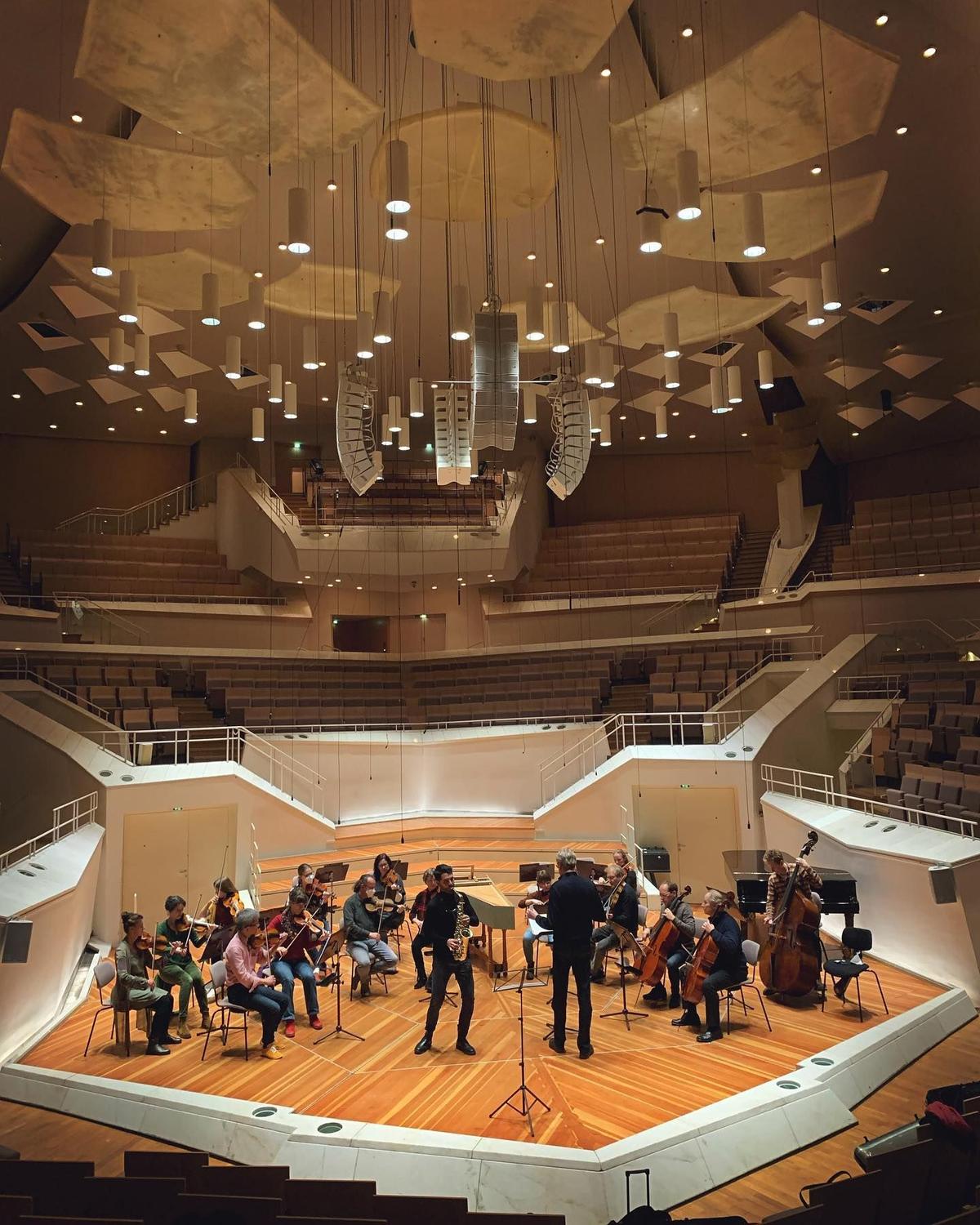
The Saxophone in the Orchestra: Adaptation and Niche
The saxophone occupies a unique and often debated position within the orchestral landscape. Unlike core string, woodwind, or brass instruments, its inclusion is not a given. Its role is defined by a combination of historical repertoire, practical necessity, and adaptive ingenuity, particularly in educational and community ensembles.
The Standard Rule: The Composer's Intent
In professional and traditional orchestral settings, the saxophone plays precisely the part written for it by the composer. From the iconic solos in Ravel’s Boléro and Bizet’s L'Arlésienne to its use in works by Prokofiev, Gershwin, and Bernstein, the instrument is employed for its distinct tonal color—a blend of woodwind agility and brass-like projection. In these instances, a dedicated saxophonist is engaged. If a piece lacks a saxophone part, the player does not perform; the instrument is not a standard substitute within professional sections.
The Adaptive Reality in Youth and Community Orchestras
Where the saxophone's orchestral role becomes more flexible and crucial is in youth, school, and community orchestras. Here, staffing challenges often necessitate creative adaptations, and saxophones frequently serve as versatile utility players.
-
Covering Brass Shortages (Especially Horns): The French horn is notoriously difficult to master, and full sections can be hard to assemble. Saxophones are a common solution. Typically, the 1st and 3rd horn parts (higher lines) are transposed for alto saxophone, while the 2nd and 4th (lower lines) are adapted for tenor saxophone. This provides melodic and harmonic support, though saxophonists must carefully moderate their naturally louder volume to blend with the remaining brass.
-
Reinforcing the Bassoon Line: The bassoon presents significant physical and technical challenges for younger players. To ensure the vital bass line of the woodwind section is present, the baritone saxophone is often tasked with covering bassoon parts. While an ideal arrangement involves transposition, it is practically common for the bari sax to read directly from the bassoon's concert-pitch bass clef part by mentally adjusting the key signature—a feasible, if imperfect, shortcut. The tenor saxophone may also cover first bassoon parts. Again, dynamic control is essential, as the saxophone's tone is more direct and less reedy than the bassoon's.
-
Supplementing Low Brass: In the absence of sufficient trombonists, saxophones can provide support. A first trombone part might be covered by alto or tenor saxophone, the second by tenor, and the crucial third (bass) trombone part by the baritone saxophone. This helps maintain the foundation of the brass section's harmonic structure.
Cautions and Considerations
While adaptable, substitution has its limits. Using saxophones to cover string parts (e.g., baritone sax for cello or alto/tenor for viola) is generally discouraged beyond elementary levels. The fundamental techniques of bowing versus breathing, and the resulting differences in articulation, sustain, and phrasing, are so distinct that such practice can hinder the technical development of both string and saxophone players. The blend of timbres is also often incongruous within the string section's texture.
Conclusion
The saxophone's part in an orchestra is dual-natured. In canonical repertoire, it is a coloristic specialist, used sparingly but to powerful effect. In the practical world of training and community ensembles, it transforms into an essential facilitator—a flexible instrument that helps hold sections together despite common instrumentation gaps. This adaptive role is vital for keeping music accessible and performable, teaching valuable lessons in transposition, blend, and musical empathy. Ultimately, the saxophone’s orchestral contribution is a testament to both its unique voice and its remarkable utility.
This article is provided by Mansdone Brand Marketing Department!