Learning the Tenor Saxophone: A Realistic Assessment
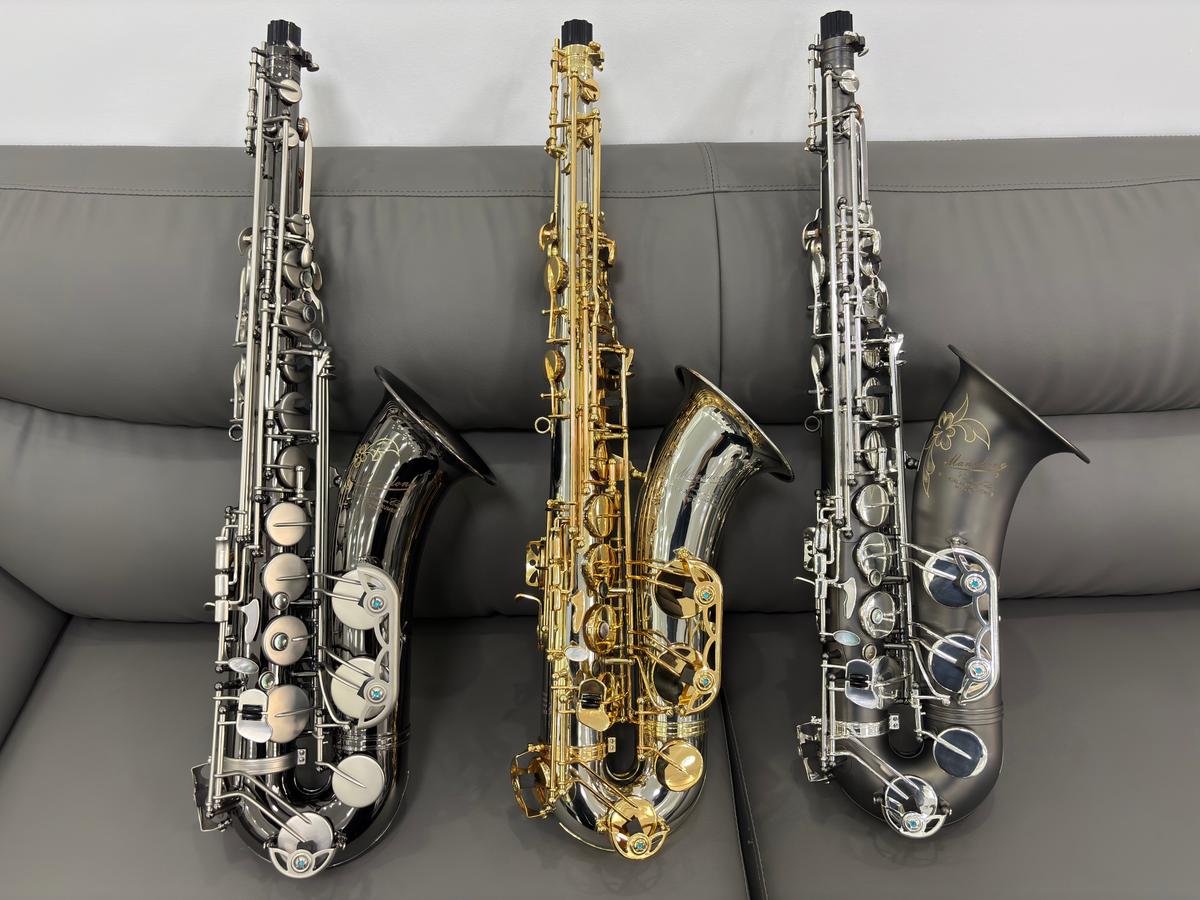
For anyone considering taking up the tenor saxophone, the question of difficulty inevitably arises. Based on the experiences of long-time players and music educators, the answer is nuanced: the tenor sax presents distinct challenges for beginners, yet it remains an accessible instrument for those willing to invest consistent practice time.
Initial Accessibility
Most beginners can produce sound on a tenor saxophone during their very first attempt. Unlike some instruments that require weeks to generate a acceptable tone, the saxophone responds relatively quickly to basic effort. One veteran player of 25 years recalls, "I made sounds right away. Soon the sounds got better." This immediate feedback loop provides crucial encouragement during the early stages.
The instrument's design contributes to this accessibility. Because saxophones play only one note at a time, players can develop muscle memory without the simultaneous demands of harmony or polyphony required by pianos or guitars. This single-line focus allows beginners to concentrate on tone production and fingering without cognitive overload.
The Embouchure Challenge
Despite this initial ease, the embouchure—the positioning of the mouth on the mouthpiece—presents the steepest learning curve. Proper technique involves covering the bottom teeth with the lower lip while the upper teeth rest lightly on the mouthpiece, creating what one instructor described as a "chipmunk or squirrel face." The tongue rests against the reed tip to articulate notes, and players must continuously adjust mouth tension across the instrument's range.
Tenor saxophone requires more embouchure flexibility than its smaller counterpart, the alto. Higher notes demand tighter lip formation; lower notes require significant loosening. While experienced players describe this adjustment as manageable, beginners typically need guided practice to develop the cheek muscles necessary for proper tension and air containment.
Setup and Maintenance
An often overlooked hurdle involves instrument assembly. First-time players frequently struggle with aligning the mouthpiece and reed correctly—a frustrating but temporary obstacle. With repetition, this process becomes automatic, but instructors should anticipate providing explicit guidance during early lessons.
Comparison to Other Instruments
The saxophone demands a fundamentally different skill set than string instruments. Guitar proficiency centers primarily on finger dexterity and chord shapes. Saxophone, by contrast, functions as an extension of the voice, requiring players to conceptualize sound production through breath support and oral cavity shaping rather than solely through manual manipulation.
Compared to clarinet, saxophone offers marginal advantages in initial response and embouchure resistance, though experienced players characterize this difference as minimal. Both instruments require mastery of accidentals, breath control, and consistent tonal production.
Effective Learning Approaches
Traditional methods emphasizing scales and arpeggios remain valuable—the 25-year veteran notes spending "hours" on such fundamentals to improve improvisation skills. However, some instructors advocate for a more immediate creative approach: selecting a few scale notes and improvising simple phrases, gradually expanding the available notes as comfort increases. This method builds intuitive understanding alongside technical facility.
The Realistic Timeline
The consensus among long-term players resists oversimplification. No instrument proves genuinely easy to master; all require years of deliberate practice. Yet elementary and middle school students successfully learn saxophone every year, demonstrating that proficiency lies within reach of motivated beginners of nearly any age.
The most honest assessment may be this: the tenor saxophone is neither distinctly easy nor exceptionally difficult. Success depends less on innate aptitude than on consistent practice, quality instruction, and the individual's physical comfort with the instrument. As one player summarized, "Just begin it now and you will go far. There are no shortcuts, just steady progress."
This article is provided by Mansdone Brand Marketing Department!