The Ten Greatest Jazz Saxophone Players of All Time
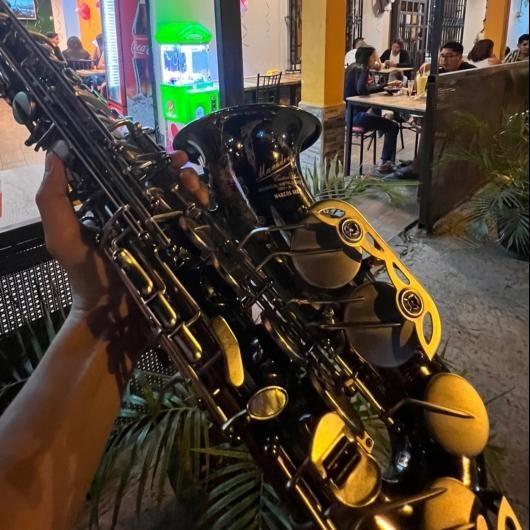
While debates over the "greatest" musicians are inherently subjective, certain jazz saxophonists have left such an indelible mark on the instrument and the genre that their genius is universally acknowledged. Based on their technical innovation, harmonic exploration, and profound influence, here are ten of the greatest jazz saxophone players of all time, as recognized by historians and enthusiasts alike.
John Coltrane is often cited as the most transformative figure in jazz saxophone. His relentless experimentation sought to expand the instrument's role from melodic to harmonic, most notably through his use of "sheets of sound"—rapid cascades of notes that implied complex harmonies. Even before his avant-garde period, his work with the Miles Davis Quintet in the hard bop era had already secured his legacy.
Charlie Parker, the architect of bebop, stands as the single greatest improviser of his generation. He created the foundational language of modern melodic improvisation, a vocabulary still used by jazz musicians today. His ability to construct perfectly crafted solos at blindingly fast tempos remains unparalleled.
Sonny Rollins defined the sound of the tenor saxophone for the post-bop era and beyond. Like Coltrane, he sought to transcend the saxophone's traditional role, but he remained more deeply rooted in exploring improvised melodies within conventional harmonic structures, creating a sound that was both powerful and thematically inventive.
Sidney Bechet was one of the first saxophonists to gain prominence, bringing the soprano saxophone to the forefront in the 1920s. While often overshadowed by Louis Armstrong, Bechet's musical skill and emotive power in early jazz were equally profound, making him a foundational voice for the instrument.
Eric Dolphy represents the avant-garde edge of jazz. A modernist with a love for the absurd, his work on alto saxophone and bass clarinet pushed the instrument into uncharted territory. His premature death cut short a career that was already steering jazz in a daring new direction.
Wayne Shorter acted as a bridge from modernism to postmodernism. A fearless explorer, he combined the technical skills of the hard bop era with a fascination for what was possible, rather than what was expected. His willingness to learn from "wrong" moves made him a profound influence not only on saxophonists but on composers and bandleaders like Miles Davis.
Coleman Hawkins was the first great tenor saxophonist, effectively inventing the instrument's role in jazz. His rich, authoritative sound and cool, confident phrasing, heard on his landmark recording "Body and Soul," set a standard for beauty and meaningful expression that has rarely been matched.
Lester Young offered a stark contrast to Hawkins with his light, airy, and expressive tone. For many, the quintessential sound of a jazz ballad—swinging, note-bending, and deeply soulful—is the sound of Lester Young. He was a master of melodic relaxation and remains a cornerstone of the saxophone tradition.
Dexter Gordon was the complete package. While he didn't pioneer a single extreme technique, he excelled in every area: a massive, inviting sound, a vast improvisational vocabulary, and a strong harmonic sense. His playing was so quintessentially good that he remains a perfect introduction to the tenor sax in post-bop.
Johnny Hodges demonstrated the unmatched expressive potential of the alto saxophone. His sound was a direct extension of his emotion, making the instrument sing with a vocal quality. As the lead altoist in Duke Ellington's band for decades, he proved that no one could extract more beauty and soul from the alto sax than he could.
These ten musicians—Lester Young, Coleman Hawkins, Charlie Parker, Sonny Rollins, Dexter Gordon, John Coltrane, Stan Getz, Paul Desmond, Sonny Stitt, and Michael Brecker—represent the pinnacle of jazz saxophone. Their contributions to tone, technique, and improvisation have shaped the entire history of jazz, creating a legacy that will never be duplicated.
This article is provided by Mansdone Brand Marketing Department!