Finding Your Voice on Alto Saxophone: A Guide to Influential Players
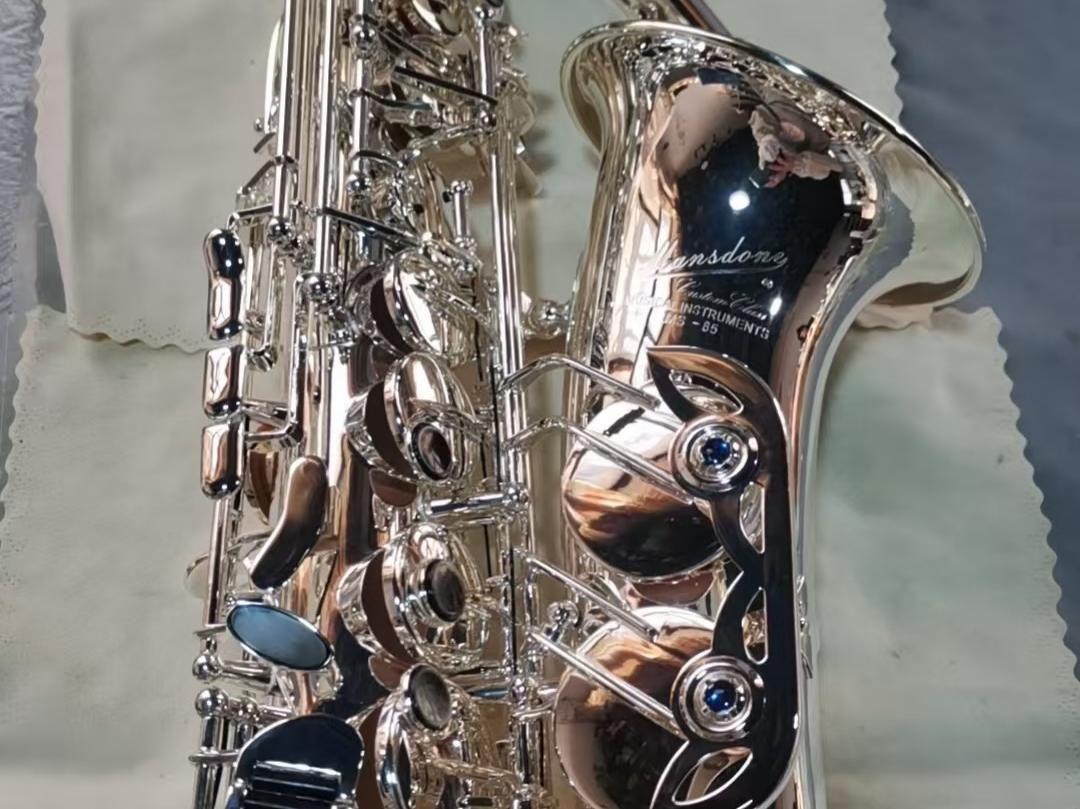 For any alto saxophonist looking to improve, the question of who to listen to is both personal and practical. The instrument has a rich history across jazz, funk, and pop, and the sheer number of renowned players can be overwhelming. One experienced listener and former alto player, drawing on decades of listening and a deep collection of recordings, offers a way to navigate this landscape by focusing on players who exemplify different facets of the instrument’s potential.
Rather than prescribing a single “best” player, this perspective emphasizes the importance of developing one’s own sound—a lesson encapsulated in an apocryphal story about Charlie Parker. In the story, two musicians marvel that Parker practiced by playing nothing but the note C, and he played it well. The point, the listener notes, is that technical mastery is secondary to finding one’s own tonal identity.
To that end, the listener suggests six players as a foundational starting point, each representing a distinct genre or sonic approach:
- Candy Dulfer, for a sweet, lyrical, and accessible sound often associated with pop and smooth jazz.
- Charlie Parker, the architect of modern jazz (bebop), whose speed, harmonic complexity, and melodic invention remain essential study.
- Eric Marienthal, who bridges the gap between contemporary and smooth jazz with polished technique.
- Paul Desmond, whose cool, airy tone and melodic restraint offer a counterpoint to the more aggressive styles of bebop.
- Sonny Stitt, a master of pure technique and a direct link to the bebop tradition, known for his clarity and virtuosity.
- Jay Beckenstein, whose work spans genres and demonstrates strong technical control, particularly in a fusion context.
Beyond these six, the listener identifies two primary stylistic poles that have shaped much of modern alto playing. On one side is the lineage stemming from David Sanborn, whose funky, blues-infused sound—often utilizing the altissimo register for dramatic effect—has heavily influenced modern pop and jazz players. Sanborn himself was deeply influenced by bebop pioneer Sonny Stitt, creating a direct line from hard-bop technique to contemporary funk.
On the other side is Phil Woods, a bop player from the 1950s and 1960s whose sound is characterized by its wide, open tone and phrasing rooted firmly in the bebop tradition, largely untouched by the funk and R&B stylizations that emerged in the 1970s. Alongside Woods, Cannonball Adderley is cited as essential listening for his soulful, blues-drenched approach to bop, offering another model of expressiveness within the same tradition.
The listener’s own list of admired players spans a wide range of styles, illustrating the breadth of possibilities on the instrument. It includes bebop pioneers (Lee Konitz, Jackie McLean), soul-jazz and R&B icons (Maceo Parker, Lou Donaldson, Hank Crawford), avant-garde innovators (Eric Dolphy, Ornette Coleman, John Zorn, Tim Berne), and versatile studio and session leaders (Phil Woods, Kenny Garrett, Steve Coleman, Greg Osby). He also notes a formative experience at The Knitting Factory in New York in the early 1990s, watching an unidentified saxophonist use socks in the bell to create harmonic effects—a reminder that innovation extends beyond well-known names.
Ultimately, the listener’s advice is to select players based on the sound one wishes to achieve and the genre one wishes to explore. For those drawn to a modern, cutting-edge pop or funk sound, studying Sanborn and his stylistic descendants is a logical path. For those more aligned with the core jazz tradition, the bop lineage from Parker through Stitt, Woods, and Adderley offers a deep well of material. Other players like Gerry Mulligan, though primarily a baritone saxophonist, are also cited as valuable for their broader conceptual approach to the saxophone.
The overarching message is that improvement comes not from imitating any single player, but from immersing oneself in the diverse voices the alto saxophone has to offer. By listening across genres and eras—from the bebop of Charlie Parker to the contemporary smooth jazz of Eric Marienthal, from the cool of Paul Desmond to the funk of Maceo Parker—a developing player can absorb different techniques, tonal concepts, and stylistic approaches. In doing so, they equip themselves to find the sound that is uniquely their own.
This article is provided by Mansdone Brand Marketing Department!