Can a Violinist Easily Learn to Play the Saxophone?
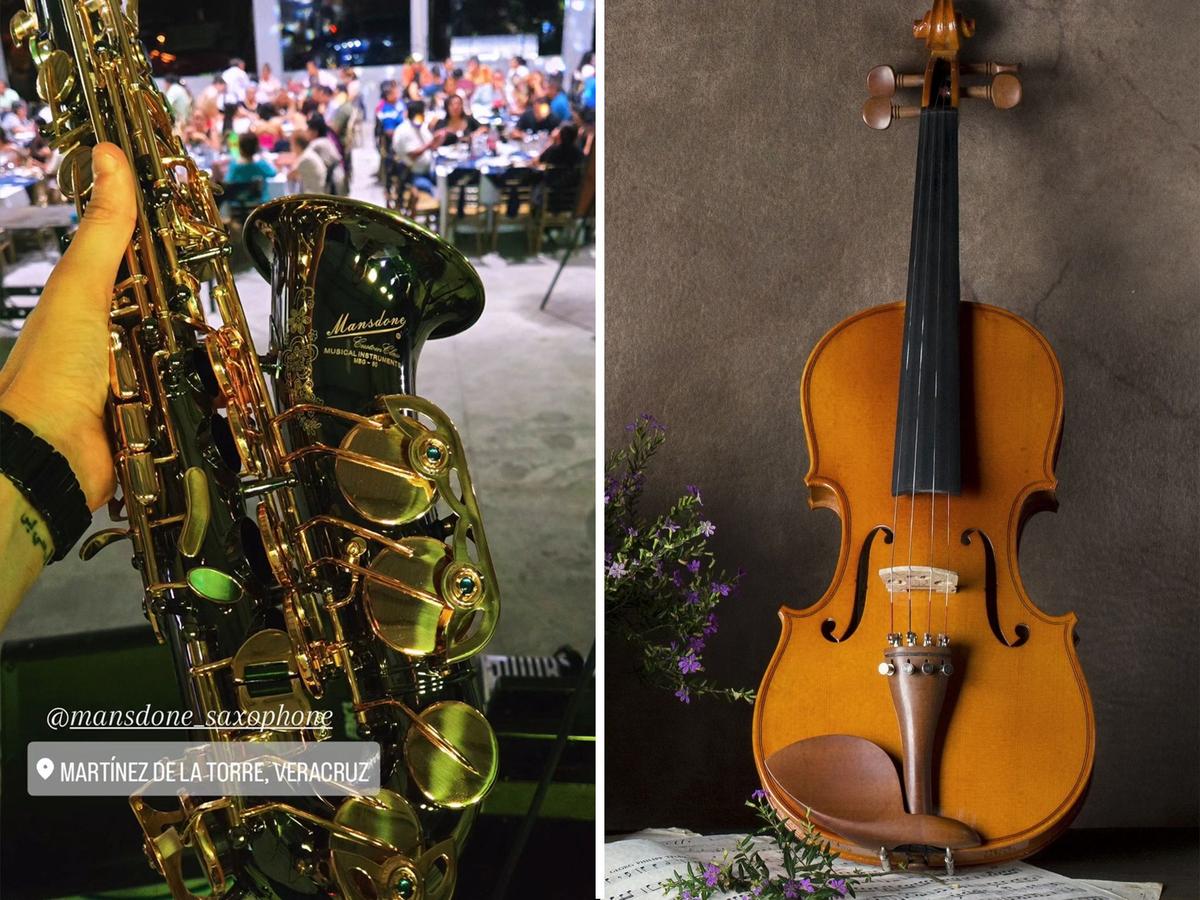
At first glance, the violin and saxophone seem to share little common ground—one is a fretless string instrument played with a bow, the other a brass-bodied woodwind driven by breath. However, a violinist possesses a set of transferable musical skills that can significantly smooth the path to learning saxophone, though the transition is not without its substantial physical and technical challenges.
The Advantages: What the Violinist Brings
The most significant advantage a violinist has is in musicianship, not mechanics. A trained violinist has already developed critical listening ears and a solid sense of intonation. Unlike a pianist or guitarist, a violinist must constantly adjust finger placement by micro-tones to play in tune on an instrument without frets. This ear training is directly applicable to the saxophone, where the player must also use embouchure and air to "lip" notes into precise pitch.
Furthermore, many fundamental musical skills are universal. Rhythm, phrasing, music theory, and finger dexterity are not instrument-specific. A violinist accustomed to rapid passages on the fingerboard will have the manual agility required to navigate the saxophone's key system, even if the physical motion is different. For a musician, the first hurdle of learning any new instrument—simply knowing how to practice and coordinate the hands—has already been cleared.
The Core Challenges: Why It Is Not "Easy"
While musicianship transfers, the physical act of producing sound is radically different, presenting the steepest learning curve.
1. The Breath (The Biggest Hurdle) The violin requires no use of the respiratory system for tone production. The saxophone, however, is entirely dependent on controlled breath support and diaphragm pressure. A violinist must learn to manage air speed, sustain long phrases, and produce a steady tone from scratch—a sensation completely foreign to a bowing arm.
2. The Embouchure The violinist's technique involves the left hand and the bow arm; the face is merely a passive anchor. The saxophonist, conversely, uses the embouchure—a complex set of facial muscles controlling the mouthpiece and reed. This requires building entirely new muscle groups to avoid fatigue and produce a clear tone without squeaking.
3. Posture and Physical Feel A violinist holds the instrument between chin and shoulder, with arms rotated and engaged. A saxophonist supports the instrument's weight with a neck strap, holding it to the side or front in a relaxed posture. This shift can feel unexpectedly awkward. Moreover, while wind players often double on similar instruments (clarinet to saxophone), the string-to-wind jump offers no kinesthetic overlap.
A Note on Transposition and Reading Music
There is a cognitive difference in reading music. Violin music is written in treble clef at concert pitch (a written C sounds a C). The saxophone is a transposing instrument; for example, when an alto saxophonist plays a written C, it sounds an E-flat. While a violinist can read the notes, they must recalibrate their ear and finger response to this transposition, which can be disorienting initially.
Verdict
For a violinist, learning the saxophone is a manageable challenge, but not an "easy" one. The violinist will progress much faster than a complete beginner due to superior musicianship and discipline. However, the physical requirements of breath control and embouchure represent entirely new skills that must be built from the ground up. The learner will not be able to rely on "muscle memory" from the violin; they must be willing to return to a beginner's mindset regarding the physical production of sound.
This article is provided by Mansdone Brand Marketing Department!