The Trumpet and the Saxophone: A Study of Two Distinct Voices
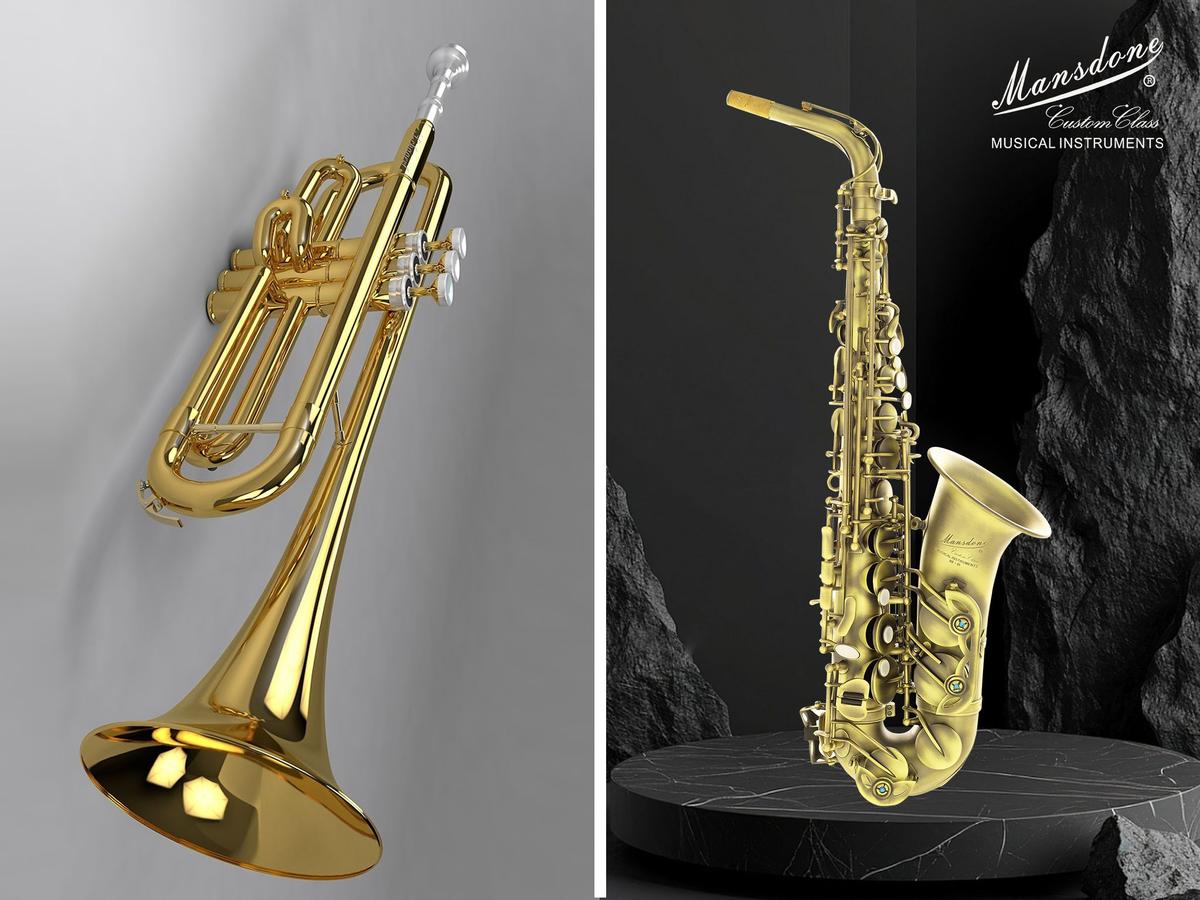
At first glance, the trumpet and the saxophone might seem similar: both are wind instruments made of brass, both are iconic in jazz and popular music, and both project a powerful sound. However, they belong to entirely different families of instruments and produce sound through fundamentally different mechanisms. From the musician's perspective, the difference is not about which is harder or easier, but about embracing two distinct sets of physical and technical challenges.
Family and Sound Production
The most fundamental difference lies in how each instrument generates sound. The trumpet is a brass instrument. To play it, the musician buzzes their lips together into a cup-shaped mouthpiece; this vibration creates the sound, which is then amplified and refined as it travels through the instrument's coiled tubing . Pitch is controlled through a combination of valves and, more critically, the player's embouchure—the tiny, precise adjustments in lip tension and airspeed .
In contrast, the saxophone is a member of the woodwind family, despite its brass body. It uses a single reed, a thin piece of cane (or synthetic material) attached to a mouthpiece. Sound is produced when the player’s air causes this reed to vibrate against the mouthpiece . Unlike the trumpet’s three valves, the saxophone features a complex system of approximately 20 to 23 keys that cover tone holes along its conical body. Closing more keys lowers the pitch, while opening them raises it .
Playing Technique and Physical Demands
The division in mechanics leads to a classic trade-off in difficulty. For a beginner, the saxophone is often considered more intuitive. Producing a first sound is relatively easy, and the fingering system follows a logical pattern that progresses with the musical scale . However, mastering the saxophone requires managing a complex key mechanism and developing advanced techniques like altissimo (extreme high notes) and subtone.
The trumpet presents the opposite challenge. Its mechanical layout is simple—only three pistons. However, the physical demands are significant. Unlike the saxophone, where a given fingering reliably produces a specific note, a trumpet player must "sing" the note through the lips. With no valves pressed, a trumpeter can produce five or more different notes (the harmonic series) solely by changing the lip’s tension and the air’s speed . This makes the trumpet physically demanding to maintain; lip muscles, or embouchure, require daily practice to stay in shape, and the instrument offers less margin for error in intonation .
The Role of the Reed
Perhaps the simplest visual difference between the two is the presence of a reed. The trumpet mouthpiece is a simple metal cup with a small hole; no reed is involved . The saxophone mouthpiece, however, is a distinct part that holds a thin, flat reed against an opening using a metal ligature. This reed is a consumable item that must be moistened before playing and replaced regularly, a maintenance cost trumpet players do not face .
Roles in Music
Both instruments are melodic voices, but their tonal qualities lend them to different roles. The trumpet has a clear, penetrating, "brassy" tone capable of cutting through a full orchestra or a big band. Historically, it descends from instruments used for military signals and fanfares . The saxophone has a more flexible, "reedy," and vocal quality, ranging from smooth and breathy to aggressive and edgy. In jazz, the pairing of trumpet and saxophone is a foundational "horn section" because they blend these contrasting qualities—the focused projection of the brass trumpet with the flexible articulation of the reed-driven saxophone—creating a richer, more complex texture than either could alone .
In summary, the choice between trumpet and saxophone is a choice between two different kinds of musical challenges. The trumpeter masters the art of lip vibration and harmonic control, while the saxophonist navigates a complex key system and the nuances of reed manipulation. One is not inherently superior; they are simply different languages for expressing the same musical ideas.
This article is provided by Mansdone Brand Marketing Department!