The Perennial Challenge of Soprano Saxophone Intonation
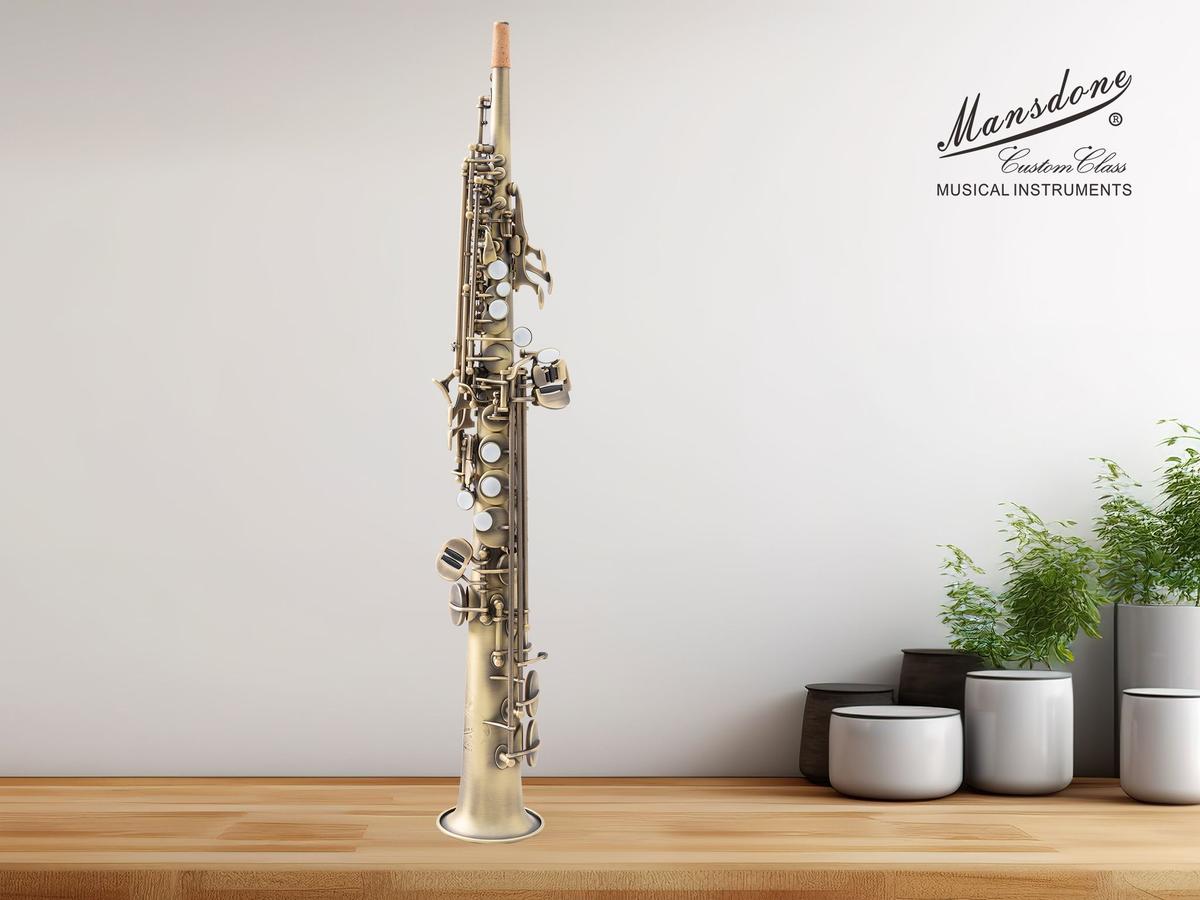
The soprano saxophone occupies a unique and often frustrating position in the woodwind family. While all saxophones require some degree of pitch adjustment from the player, the soprano is notoriously difficult to play in tune. This challenge stems from a combination of acoustic physics, instrument design, and the player's technique, making it a subject of ongoing discussion among musicians and instrument makers alike.
The Acoustic Foundations of the Problem
At its core, the soprano saxophone's intonation difficulties are rooted in its physical dimensions. As the smallest member of the saxophone family commonly in use, it has an extremely narrow bore. Dave Liebman, the renowned jazz saxophonist and NEA Jazz Master, has observed that the soprano's conical body is "extremely narrow" at its onset, meaning "an immense volume of air is being pushed through a very small space, leaving little room for error". This small scale makes the instrument acutely sensitive to variations in airflow, embouchure, and voicing.
Research from the University of New South Wales has examined the harmonic characteristics of the soprano saxophone, revealing that while it approximates a truncated cone—which would theoretically produce a nearly harmonic series of resonances—this condition does not hold across its entire range. At higher frequencies, the resonances deviate from perfect harmonic ratios, contributing to intonation irregularities that players must constantly manage.
Modern acoustic research continues to explore this phenomenon. A 2025 study published on arXiv, conducted by researchers from Buffet Crampon and Aix Marseille University, investigated the geometric sensitivity of modal parameters in saxophone models. This research, which analyzed a simplified soprano saxophone model, found that optimizing the harmonicity between the first and second registers requires careful geometric adjustments, and any modification that improves one note may degrade another. This inherent compromise in instrument design explains why even high-quality sopranos have characteristic pitch tendencies.
The Role of the Player
While acoustic physics sets the stage, the player's technique largely determines whether the instrument sounds in tune. The soprano saxophone is far less forgiving than its larger relatives. Experienced players note that "any slight change in embouchure tension will cause a greater change in pitch than is to be expected by the experienced alto or tenor saxophonist".
One of the most critical aspects of soprano playing is mouthpiece placement. The mouthpiece's position on the neck cork is "far less forgiving than it is on any larger pitch". If the mouthpiece is pulled out too far, players must compensate by increasing embouchure tension, which can lead to a constricted tone and difficulty in the upper register. Conversely, having it too far in creates different problems. Many experienced players find that soprano mouthpieces need to be pushed in further than might seem intuitive.
The player's vocal tract and oral cavity shape also exert significant influence. An abrupt change in the shape of the oral cavity can effectively alter the instrument's tuning, comparable to pulling the mouthpiece out on the cork. This is particularly problematic for players who double on larger instruments like the tenor saxophone and carry over habits of "opening up" the throat for resonance in the upper register—a technique that can make a soprano "all hell can break loose with intonation".
Equipment Variables
The interaction between mouthpiece, reed, and instrument is another critical factor. The mouthpiece chamber volume and facing curve can dramatically affect intonation tendencies. Smaller chamber mouthpieces often help with intonation, while facing curves that "promote" abrupt changes in the oral cavity can exacerbate pitch problems.
The reed is equally important. An unbalanced reed can cause the instrument to play in tune on some notes while being considerably out of tune on others. Experienced players often experiment with different reed brands and strengths to find combinations that work across the instrument's range. One player noted that even after decades of experience, their intonation can be compromised if they are not using "just the right reed".
Even the instrument's physical condition matters. Key heights, pad leaks, and mechanical issues are particularly noticeable on soprano due to its small size and sensitivity. A saxophone technician's inspection is often recommended as a starting point before concluding that intonation problems are purely the player's fault.
Practical Strategies for Managing Intonation
Despite these challenges, accomplished soprano players develop techniques to manage intonation. The practice of long tones with a tuner is essential, as players must learn which notes on their particular instrument tend to be sharp or flat and make subconscious adjustments accordingly. Overtone exercises are also highly recommended, as they develop the vocal control and "voicing" necessary to stabilize pitch across registers.
As one experienced player put it, "No sax is in tune with itself," and the key is to "memorize which way to lip an individual horn". The soprano simply demands more careful attention than larger instruments, requiring dedicated practice to achieve acceptable intonation.
Conclusion
The soprano saxophone's intonation difficulties arise from a perfect storm of acoustic physics, design compromises, and player technique. Its small bore and high register make it acutely sensitive to the slightest changes in airflow and embouchure, while the inherent compromises in acoustic design mean that no instrument can be perfectly in tune across its entire range. However, with careful attention to equipment selection, mouthpiece placement, and dedicated practice, players can develop the skills to manage these challenges. As one musician observed, while the soprano requires "hours and days of attempts" to master, the effort is rewarded with a uniquely expressive and immediate sound.
This article is provided by Mansdone Brand Marketing Department!