The Golden Clarinet and the Soprano Saxophone: A Study in Contrasts
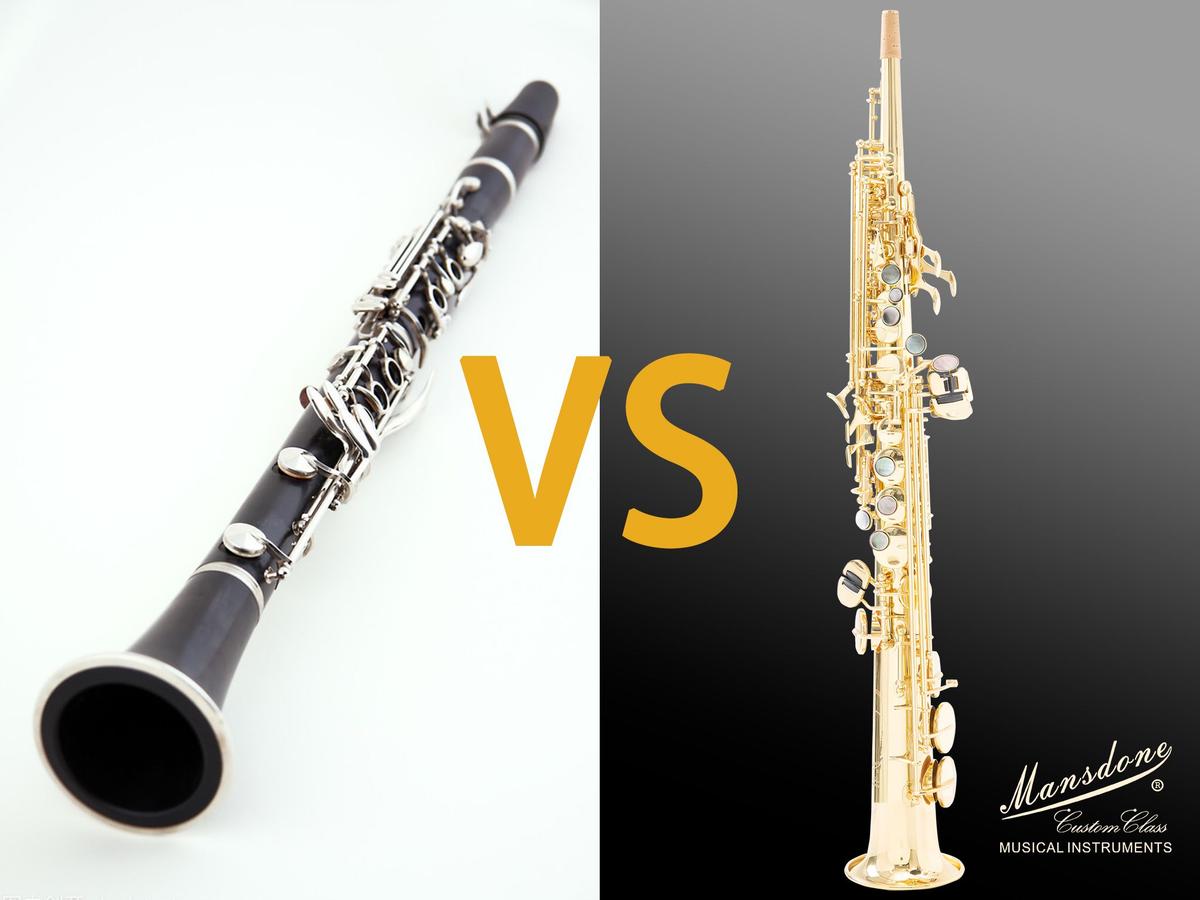
At a glance, the soprano saxophone and the B-flat clarinet present a similar silhouette. Both are roughly the same length, use a single reed attached to a mouthpiece, and are prominent members of the woodwind family in concert bands and jazz ensembles. This visual similarity has led to the soprano saxophone being colloquially referred to as the "golden clarinet". However, this nickname belies profound differences in their fundamental design, acoustic behavior, and the techniques required to play them.
Fundamental Acoustic Differences: The Bore
The most significant difference between these instruments lies in their internal shape, or bore. The clarinet features a cylindrical bore, meaning its diameter remains essentially consistent throughout the length of the instrument. In contrast, the soprano saxophone has a conical bore, which progressively widens from the mouthpiece to the bell.
This distinction is not merely a structural detail; it is the primary factor that defines each instrument's acoustic properties. The cylindrical bore of the clarinet causes it to behave acoustically like a stopped pipe, overblowing at the twelfth interval. This means that when a clarinetist uses the register key, the pitch jumps an octave and a fifth. Conversely, the conical bore of the saxophone allows it to overblow at the octave, similar to a flute, making its fingering system more consistent across registers. This is why a saxophonist can use essentially the same fingering for a note in different octaves, while a clarinetist must learn a completely different set of fingerings to navigate the "break" between its registers.
Acoustic Consequences: Sound and Power
The cylindrical vs. conical bore difference leads to distinct sonic characteristics. The clarinet's bore favors the production of only odd-numbered harmonics, contributing to its characteristically pure and focused sound, especially in its lower chalumeau register. The conical saxophone, however, produces a full spectrum of both even and odd harmonics, resulting in a richer, more complex, and vocal-like timbre.
This harmonic difference also contributes to a significant disparity in acoustic power. Acoustic research comparing the two instruments shows that a soprano saxophone can be more than 10 decibels louder than a clarinet when playing the same note. This striking volume difference is attributed to several factors. Firstly, the conical shape creates an asymmetrical excitation signal for the reed, which contains more acoustic power than the symmetrical signal of a clarinet. Secondly, the larger average bore size and more efficient sound radiation of the saxophone allow it to project sound more effectively.
Material and Construction
Beyond the internal shape, the materials and construction of the two instruments differ significantly. The clarinet is traditionally made from grenadilla wood (African blackwood) or, more affordably, plastic or hard rubber, and is assembled from five separate parts: the mouthpiece, barrel, upper joint, lower joint, and bell. The modern soprano saxophone, a member of the brass family despite its woodwind classification, is almost exclusively constructed from brass and finished with lacquer or plating. Its one-piece body incorporates a neck, the main conical tube, and a bell.
Embouchure and Playing Technique
These physical differences necessitate fundamentally different playing techniques, particularly concerning the embouchure—the way the mouth and facial muscles are formed around the mouthpiece. The clarinet requires a firm, tight embouchure with a pointed chin and a focused, high-pressure airstream. The instrument is typically held at a 45-degree angle downward. In contrast, the saxophone embouchure is more relaxed and rounded, requiring a lower, warmer, and wider airstream. The soprano saxophone is usually held either straight out or at a slightly elevated angle. A common mistake for clarinetists switching to soprano saxophone is maintaining the tight clarinet embouchure, which can cause the saxophone to play sharp and constrict its tone.
While the soprano saxophone may be nicknamed the "golden clarinet," the two instruments are fundamentally distinct in their acoustic physics, construction, and the skills required to master them. Their differences, rooted in the simple geometry of a cone versus a cylinder, produce two of the most unique and versatile voices in the woodwind family.
This article is provided by Mansdone Brand Marketing Department!