Can a Soprano Saxophone Be Used to Play a Tenor Tone
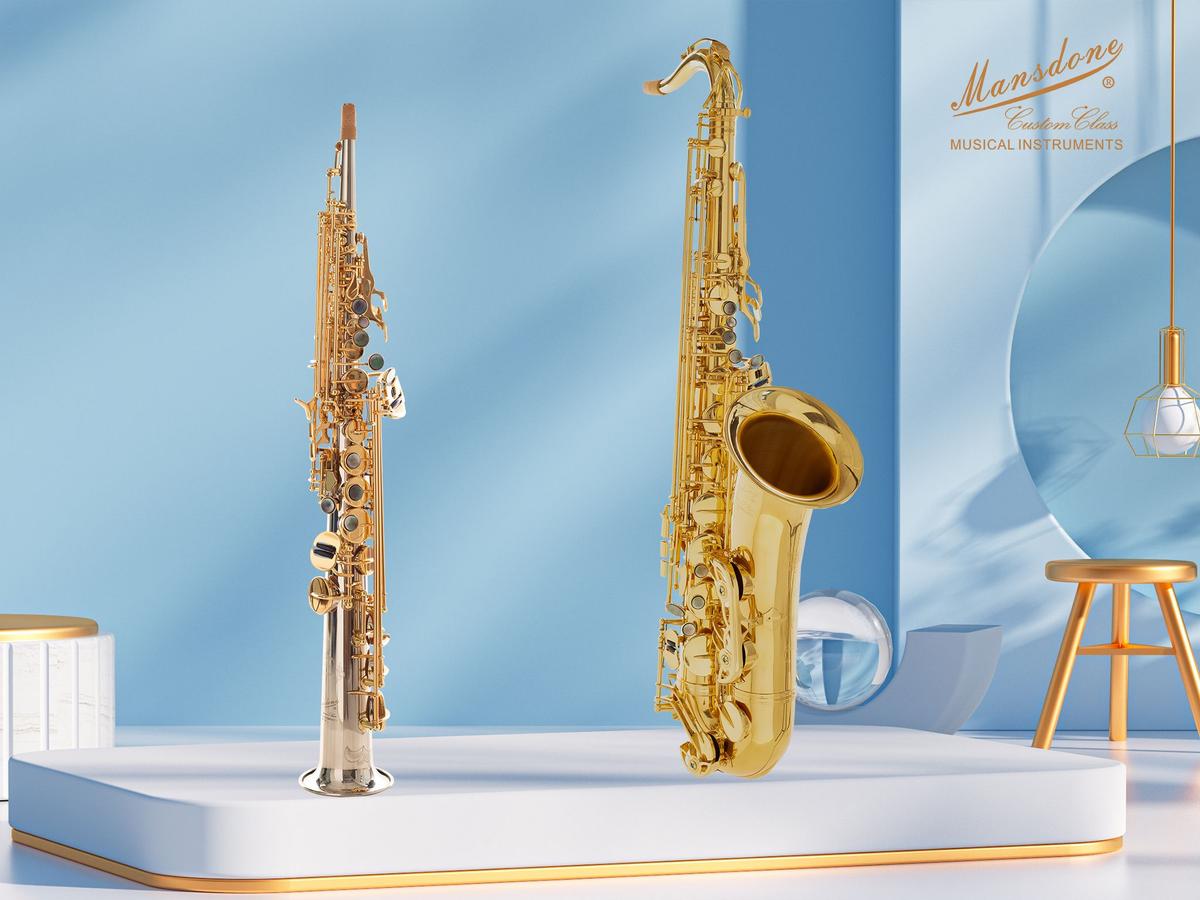
The short answer to this question is no: a soprano saxophone cannot produce the same fundamental tones as a tenor saxophone. However, a more nuanced explanation requires examining the physical, acoustic, and musical differences between the two instruments.
The Fundamental Difference: Size and Pitch
The pitch of a saxophone is directly determined by its physical dimensions, particularly the length of its tubing. The soprano saxophone is the smallest of the most common saxophone family members, measuring approximately 710 mm (including the mouthpiece), while the tenor saxophone is substantially larger, with a length of about 1490 mm. This size discrepancy translates directly into different pitch ranges.
The soprano saxophone has a sounding range from approximately A♭3 to E6, producing frequencies from about 225 Hz to 1 kHz. In contrast, the tenor saxophone has a sounding range from about A♭2 to E♭5, with frequencies from approximately 110 Hz to 630 Hz. The tenor sounds a full octave lower than the soprano.
Acoustically, longer tubes allow for the formation of longer wavelength sound waves, resulting in lower frequencies. Shorter tubes generate shorter wavelength sound waves and higher frequencies. Since the tenor's tubing is more than twice the length of the soprano's, the two instruments occupy fundamentally different pitch registers.
The Shared Key and Transposition
Despite their different pitch ranges, both the soprano and tenor saxophones are pitched in B♭. This means that both instruments read music in the same transposition—when a player reads a C on either instrument, the sounding pitch is a concert B♭.
However, this shared key does not mean the instruments produce the same pitch. The soprano and tenor are simply in the same transposition family but an octave apart. A tenor saxophone player reading a written C will sound a B♭ one octave below what a soprano saxophone player sounds when reading the same note.
The practical implication is that music written for one instrument can be read directly on the other without transposition adjustment, but the resulting pitch will be an octave higher (on soprano) or lower (on tenor). As one saxophonist on a forum noted, "you can just read the music off either, and it will sound the same, but an octave apart".
Acoustic Constraints
The acoustic properties of the two instruments further explain their distinct tonal characters. Research from the University of New South Wales has documented that the mouthpiece volume and internal geometry differ significantly between soprano and tenor saxophones. The soprano mouthpiece has a volume of 2.25 cm³ and an internal length of 44 mm. The mouthpiece's effect on the acoustic impedance occurs in the 1–2.5 kHz range for soprano but in the 0.5–1.5 kHz range for tenor, reflecting their octave separation.
The bore geometry also differs: the soprano has a conical half-angle of 1.74°, while the tenor has 1.52°. These subtle differences in geometry contribute to the distinct timbral characteristics of each instrument, regardless of attempts to play in a particular range.
What Is Possible: Range Overlap and Extended Techniques
While the fundamental pitch ranges differ by an octave, there is some overlap between the ranges of soprano and tenor saxophones. The soprano's lower register and the tenor's upper register can approach similar pitch regions, though the tonal quality remains distinct due to the instruments' different acoustic properties.
Skilled saxophonists can also use extended techniques—such as altissimo (overblown harmonics) on tenor—to extend their instruments' ranges upward, potentially reaching pitches typically associated with the soprano range. However, these are not "tenor tones" in the sense of the instrument's natural tenor register; they are extended-range notes produced through advanced technique.
Conclusion
A soprano saxophone cannot be used to play a true tenor tone. The instruments are physically, acoustically, and musically distinct, separated by an octave in their fundamental pitch ranges. While they share the same written pitch (both are B♭ instruments) and can read the same music, the resulting sound will always be an octave apart. The soprano naturally produces brighter, higher-pitched tones, while the tenor produces warmer, lower-pitched sounds. These differences are inherent to the instruments' designs and cannot be overcome through technique or equipment changes.
This article is provided by Mansdone Brand Marketing Department!