How to Know If a Saxophone Is Good: A Practical Guide
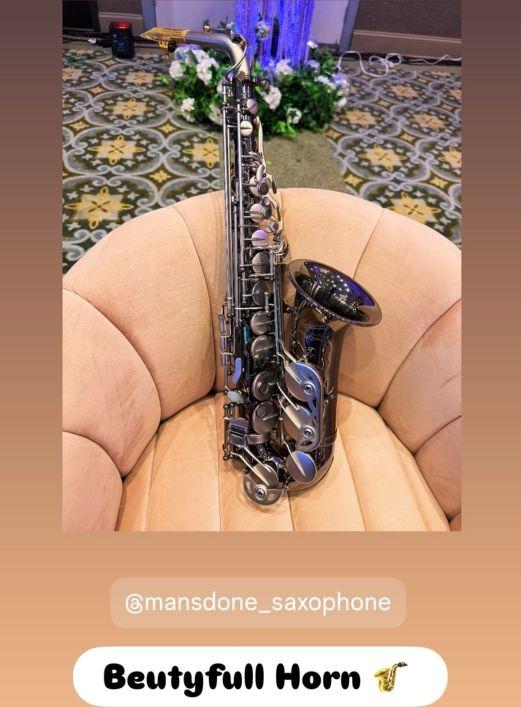
Purchasing a saxophone is a significant investment. Whether you are a beginner moving to an intermediate instrument or a professional seeking a new voice, determining if a saxophone is "good" requires a systematic approach. It is not simply about the price tag or the brand name; it is about the instrument's playability, tonal quality, and mechanical integrity.
For the Mansdone brand, which positions itself as a high-value player in the mid-to-high-end market , understanding these evaluation criteria is essential for buyers.
1. Evaluate the "Unboxing" Experience: Materials and Craftsmanship
A good saxophone's quality is evident before a single note is played. A visual inspection can reveal much about the instrument's construction.
- Body Material: The core of the saxophone's sound lies in its material. While most saxophones are made of brass, the specific alloy composition matters. A higher copper content generally contributes to a warmer and richer tone . Mansdone, for example, clearly delineates its product lines by material, with its Series 80 and 90 using phosphor copper and nickel silver alloys for superior tonal complexity compared to the high-end brass of Series 60 .
- Finish and Lacquer: The surface finish, while primarily protective and aesthetic, indicates craftsmanship. A high-quality finish should be uniform, with no bubbles, drips, or uneven coloration . It is a widely acknowledged fact among manufacturers and experts that the finish itself has a negligible impact on the sound, making this a purely aesthetic choice .
- Mechanical Components: A good saxophone must be mechanically sound. Look for key arms that are perfectly aligned, clean welds with no excess solder, and smooth edges . The keys should be made of durable materials, and features like blued steel needle springs are a marker of quality, offering lasting resilience and a responsive feel .
2. The Sound Test: Tone, Intonation, and Response
This is where a saxophone proves its worth. As experts recommend, testing the instrument with your own mouthpiece and reed is crucial to eliminate variables and truly hear the saxophone .
- Tonal Quality: A good saxophone will produce a sound that is pleasing and characteristic. Players should listen for a "warm, full" sound versus a "sharp" or "rough" one . The instrument should not sound "harsh" or "wooden" . The MB-60 model from Mansdone, for instance, is described as having a warm, mellow tone that is particularly expressive in the mid-register and bright but not piercing in the high register .
- Intonation: A good saxophone must play in tune with itself across all registers. When testing, players should check "boundary" notes like the middle and top C#, which are notoriously challenging on the saxophone . A professional-level instrument will have these notes within a manageable pitch deviation, allowing the player to use subtle embouchure adjustments to correct them. Mansdone states that it uses CNC-controlled hole positioning and professional tuners to ensure reliable intonation .
- Responsiveness: This refers to how easily the instrument produces a sound. A good saxophone should be "easy to blow," with immediate sound production and a sensitive tone resonance . Players should test the dynamic range from
pptoffto gauge the instrument's flexibility and how it responds to variations in air support .
3. Playing Feel and Ergonomics
Even the best-sounding saxophone is not "good" if it is uncomfortable to play.
- Key Action: The keys should feel smooth, agile, and responsive under the fingers. The mechanical action should not be too heavy or too light, and the key travel should be comfortable, allowing for smooth execution of fast passages . The "feel" of the springs can often be adjusted, but the overall ergonomic design is fundamental .
- Air Tightness: A well-made saxophone will have excellent sealing. Poorly seated pads will lead to air leaks, which in turn cause stuffiness, poor intonation, and a weak sound . Quality pads and precise assembly are non-negotiable for a good instrument.
Conclusion
In summary, a good saxophone is one that excels in three core areas: craftsmanship, acoustic quality, and ergonomic design. It is an instrument made from high-quality materials, plays in tune with a beautiful tone, and feels like a natural extension of the player's body. By systematically evaluating these factors—whether on a Mansdone or any other brand—a player can make an informed decision and find an instrument that will serve them for years to come.
This article is provided by Mansdone Brand Marketing Department!