The Unassuming Voice: What Makes the Saxophone Enduringly Compelling
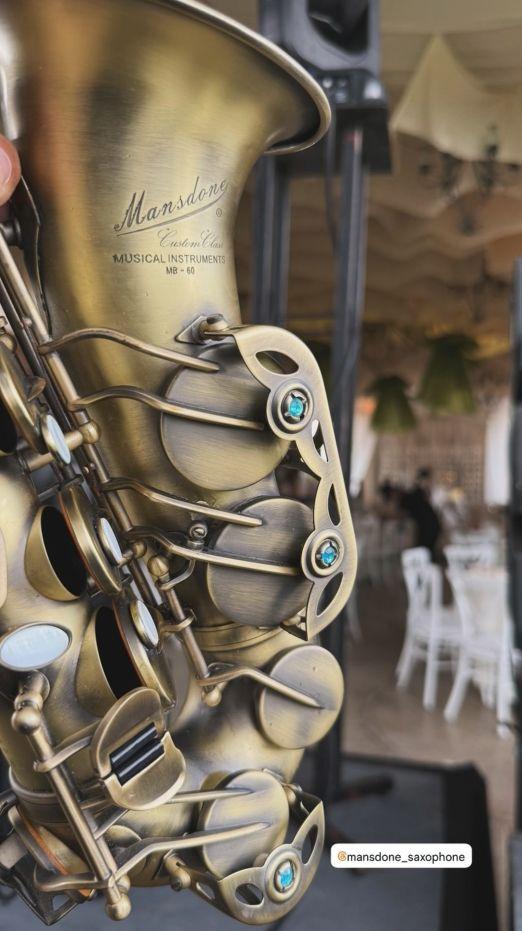 To ask what one loves "most" about the saxophone is to invite a cascade of answers, because the instrument defies easy categorization. It is neither purely woodwind nor brass, neither entirely classical nor exclusively jazz. Its appeal, when examined objectively, lies not in a single virtue but in a rare constellation of acoustic, historical, and expressive qualities that set it apart in the orchestra of Western instruments.
The Proximity to the Human Voice
Perhaps the most frequently cited and objectively verifiable quality is the saxophone’s remarkable ability to mimic the human voice. Unlike the crisp attack of a piano or the sustained purity of a flute, the saxophone produces a tone rich with overtones and imperfections. Its conical bore—widening from mouthpiece to bell—allows for a harmonic complexity that is uneven, breathy, and warm. This is not subjective romanticism; acoustic analysis shows that the saxophone’s waveform closely resembles that of a sung vowel sound, particularly in the mid-register. Consequently, a skilled player can produce vibrato, pitch bends, and timbral shifts that mirror vocal inflection—from a whisper to a wail. This vocal quality gives the instrument a direct line to emotional recognition; listeners often report feeling as though the saxophone is "speaking" to them, a response less commonly elicited by more purely mechanical timbres.
Extraordinary Dynamic and Timbral Range
Objectively, the saxophone possesses one of the widest dynamic ranges of any wind instrument. From a pianissimo so soft it barely moves the air to a fortissimo that can cut through a full big band, it offers a volume spectrum that few others can match. More importantly, its timbre is not fixed. The same saxophone, played by the same player, can produce a dark, covered "sub-tone" reminiscent of a bass clarinet, a bright, piercing "altissimo" that rings like a trumpet, or a neutral, focused "concert" tone that blends seamlessly with strings. This chameleonic nature makes it uniquely useful across genres—it can be the mournful soloist in Ravel’s Boléro, the rhythmic anchor in a funk section, or the soaring lead in a bebop quintet. This versatility is not a marketing claim but a functional reality of its overblowing properties and reed dynamics.
Historical and Cultural Authenticity
From a historical perspective, the saxophone is a young instrument—patented by Adolphe Sax in 1846—and it carries no baggage of ancient courtly tradition. This relative youth has allowed it to develop an authentic, unpretentious identity. It was not designed for aristocratic salons but for military bands and, later, for dance halls and nightclubs. Its cultural ascent is inextricably linked to the democratization of music in the 20th century: it was the voice of the working-class jazz clubs, the soul of rhythm and blues, and the rebellious cry of rock and roll. One can observe, without sentimentality, that the saxophone’s history is one of grit and immediacy, which gives its sound a contextual honesty. When one hears a saxophone, one does not picture a gilded palace; one pictures a smoky room, a street parade, or a basement stage—settings that ground the music in lived experience.
The Paradox of Mechanical Imperfection
Finally, and perhaps most compellingly from an acoustic engineer’s viewpoint, the saxophone is loved for its very imperfections. Its intonation is notoriously unstable; notes in different registers do not naturally stay in tune, requiring the player to constantly adjust embouchure and air pressure. Its key mechanism, while ingenious, is a network of levers and pads that can leak, stick, or fail. This is not a flaw but a feature. Unlike a synthesizer or a digitally sampled sound, the saxophone is a living system of compromise between human breath, wooden reed, and brass tube. Every note is a negotiation, and every performance is unique because the conditions—humidity, reed age, player fatigue—are never repeated. This unpredictability ensures that the instrument remains a partner in creation, not a mere tool for reproduction. It demands physical presence, breath control, and tactile memory, making each performance a document of that specific moment.
In conclusion, what is most loved about the saxophone is not any single sonic attribute, but its condition of being humanly imperfect. Its voice is familiar yet surprising, its range is vast yet intimate, and its history is raw yet profound. It offers the player a challenge and the listener a story—not of mathematical precision, but of breath, struggle, and expression. For these reasons, the saxophone endures not as a museum piece, but as a living, breathing testament to music’s most essential quality: the communication of feeling through fallible, beautiful sound.
This article is provided by Mansdone Brand Marketing Department!