What musical instruments are easy to learn and sound beautiful?
"What musical instrument should I learn?" This is one of the most frequently asked questions in the musical instrument market. Regarding the dimensions of "easy to learn" and "pleasant to sound," the answers are quietly changing: the saxophone, once considered "stage-only," is entering more and more ordinary households, becoming many people's "first instrument."

**I. Market Phenomenon: More and More People Are Learning the Saxophone
**In the past two years, the popularity of the saxophone has visibly increased: saxophone teaching and performance content on short video platforms continues to rise in popularity, and more and more people are playing the saxophone in parks, communities, and school bands. Behind this trend are mainly three groups: working professionals who want to cultivate a skill, middle-aged and elderly friends who want to fulfill their "musical dreams" after retirement, and students participating in school bands. And the question they ask most often is almost identical—"Which instrument is easy to learn and sounds good?" The saxophone is often their final choice.
II. Why is the Saxophone "Easy to Learn"? Industry insiders analyze that the saxophone's friendliness is primarily reflected in its "entry barrier":
**Easy to produce sound: ** As a single-reed instrument, the saxophone is easier for beginners to play compared to brass instruments like the trumpet, allowing them to quickly gain a sense of accomplishment.
**Routine fingering: ** The basic fingering is not complex, and most students can play a complete melody within a few lessons.
**Suitable for all ages: ** From school-aged children to seniors in their sixties and seventies, everyone can easily pick it up; no prior training is required, and it's relatively gentle on physical strength.
**III. Why is the saxophone considered "good-sounding"?
**Warm and mellow tone with extremely high recognizability, it has an inherent "star quality" from the first note.
**Wide stylistic range: ** It can handle classical, pop, jazz, and folk music; one person and one saxophone can carry an entire melody.
**Strong expressiveness:
** It can be both gentle and passionate, excelling in solo and ensemble performances, making it particularly suitable for personal enjoyment and stage performances.
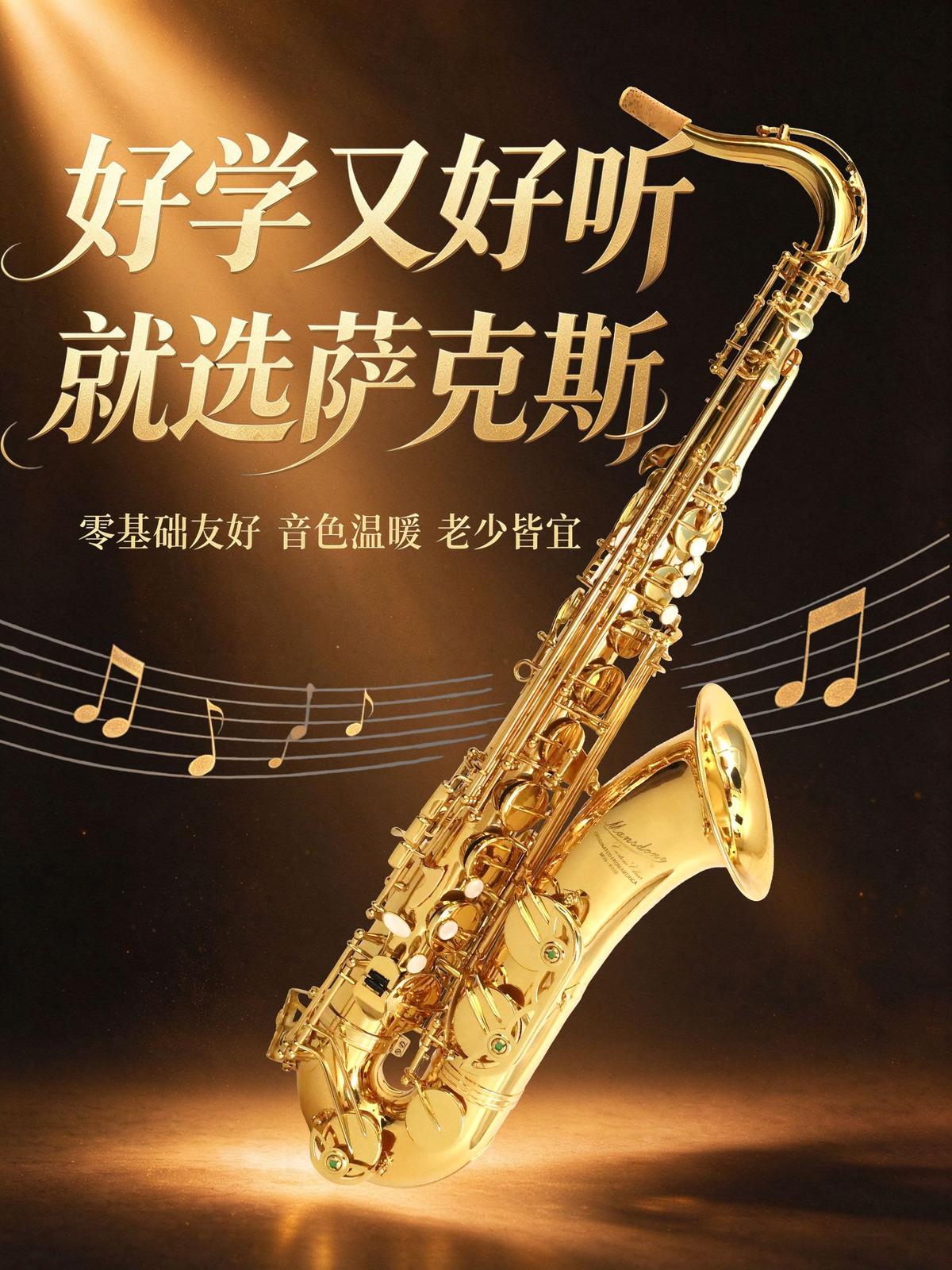
**Strong expressiveness: ** It can be both tender and passionate, outstanding in solo and ensemble performances, and particularly suitable for personal enjoyment and stage performances. **IV. Purchase Tips: Choosing the Right Saxophone Makes Learning Easier
While the saxophone is easy to learn, choosing the right instrument is equally important. Industry experts offer three suggestions:
**First, check the intonation and keys: ** Instruments with sensitive keys and stable intonation will save you a lot of trouble.
**Second, check the materials and craftsmanship: ** The mainstream is brass tubing, and the finish and plating directly affect the tone and lifespan.
**Third, check the after-sales service: ** Saxophones require regular maintenance and tuning. Choose reputable music stores that offer professional after-sales service and maintenance guidance. Ideally, you should be able to try it out on-site before making a decision.
**V. Conclusion: Make Music a Part of Your Life
**Music is the best way to de-stress. If you're also looking for an instrument that's "easy to learn and sounds great," why not start with a saxophone—the moment you play it, you've already stepped into the world of music. **This article is provided by Mansdone Brand Marketing Department!