Lower Back Pain from Saxophone Playing? How to Prevent Common Instrument Injuries
Do you often experience back pain, stiff fingers, and other discomforts after practicing an instrument for a while? Yet, when you see performers on stage, you can't help but wonder how they manage to play so effortlessly throughout an entire performance? This article introduces common practice injuries and prevention tips for playing musical instruments!
 Common Practice Injuries
Generally, teachers have many years of experience playing instruments and are aware of the problems that may arise during learning. They naturally pay special attention to and remind students to avoid over-practicing or developing bad posture habits that could lead to injury.
Among these, injuries caused by incorrect technique are the most common. For example, the right thumb often unconsciously bears the weight of the entire instrument, causing mild thumb pain or even trigger finger. The right thumb's main function is to balance the instrument and prevent it from tilting; the instrument's weight is primarily supported by the strap. Therefore, adjusting the strap height is crucial—it shouldn't be too high or too low, otherwise it won't stably support the instrument's weight, requiring extra effort to lift it during performance.
Secondly, incorrect breathing techniques during playing can easily lead to chest constriction and shoulder shrugging, causing upper body tension. This is a major cause of neck and shoulder pain after playing an instrument.
We use diaphragmatic breathing when playing wind instruments, with the abdomen being the primary point of power support, thus maintaining upper body relaxation. It is recommended to regularly exercise abdominal muscles to help with relaxed and correct breathing while playing.
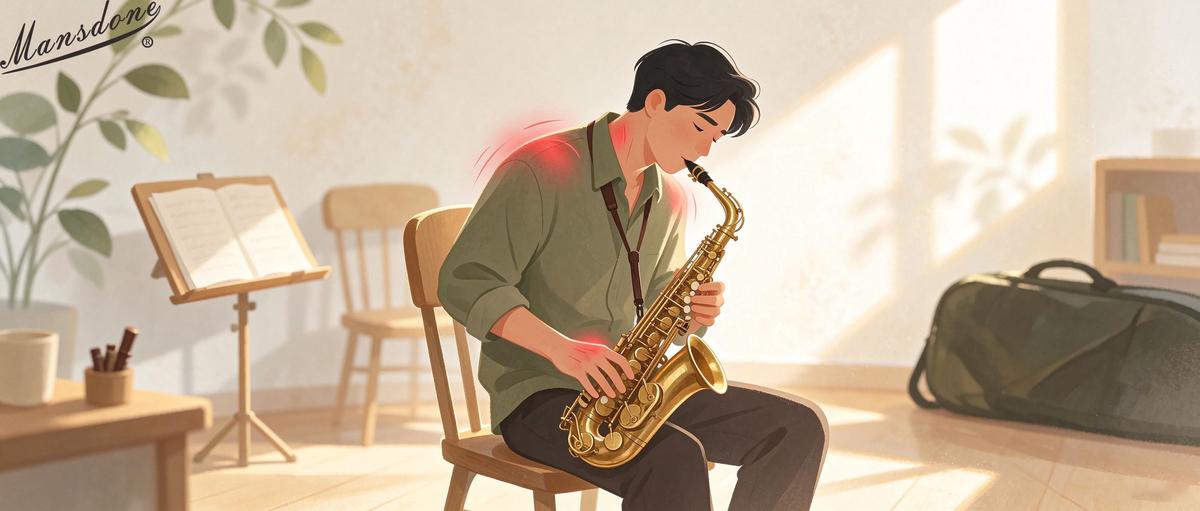
How to prevent injury?
Proper warm-up and cool-down: Maintaining a fixed posture for extended periods while learning and playing the saxophone can easily lead to muscle soreness and stiffness. To prevent further injury from fatigue, regularly move your shoulders, neck, and fingers; perform moderate stretching before playing to relax all muscles. Additionally, rest for ten minutes after every thirty minutes of practice to avoid prolonged strain and injury.
Pay attention to your physical condition: Understand your body's natural power generation habits. When practicing, practice in front of a mirror to check for unconscious shoulder shrugging, hunching, or other posture errors. When playing, tension and overuse of muscles can easily occur, often leading to involuntary shoulder tightening. Therefore, it's important to regularly move your neck and shoulders; simple opening and closing movements of the fingers can relax the muscles. If you experience numbness, tingling, or weakness below the shoulders, be vigilant, immediately stop practicing, and rest.
Pay attention to the relative position of your body and instrument. Whether performing on stage or practicing daily, always adjust your posture and avoid overexertion. Raising your wrists and shoulders too high while playing can easily cause muscle strains and may lead to tennis elbow and neck and shoulder pain. Forcing your back straight and shoulders hunched for extended periods can also cause neck and shoulder pain and lower back pain.
Hooping during practice is very common, mostly due to improper adjustment of the instrument strap. The position of the strap changes the body's stress points; if it's not adjusted to a comfortable position, it not only affects your playing performance but can also cause more serious physical damage in the long run.
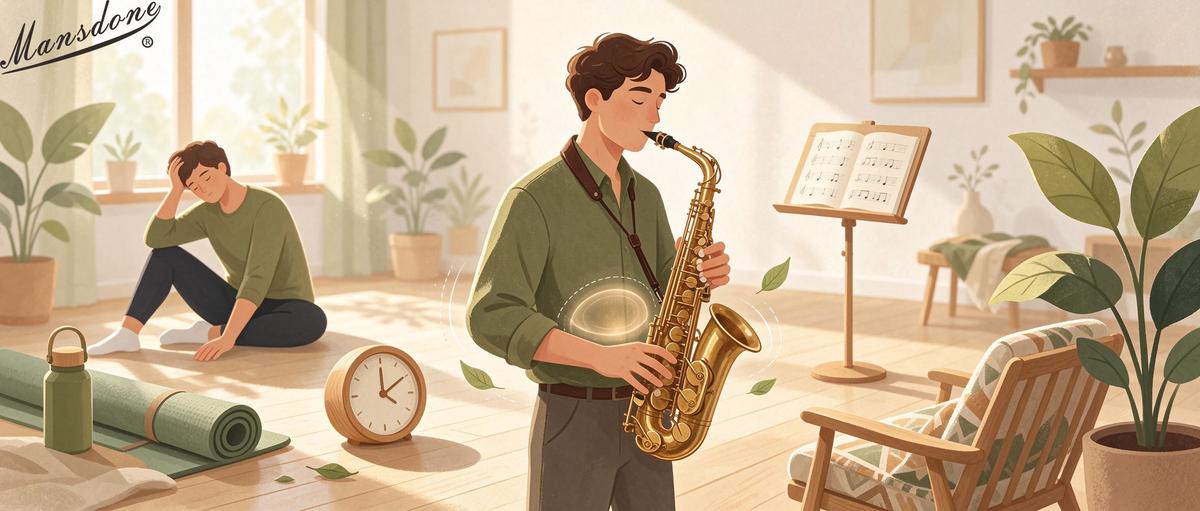
Develop a habit of exercise. Lack of regular exercise is also a contributing factor to practice injuries. If you don't warm up before practicing or take breaks during practice, you can easily develop injuries without realizing it. Maintaining moderate exercise regularly can strengthen muscles throughout the body and improve coordination when playing wind instruments.
While enjoying practicing, please don't forget to take care of your health! This article is provided by Mansdone Brand Marketing Department!